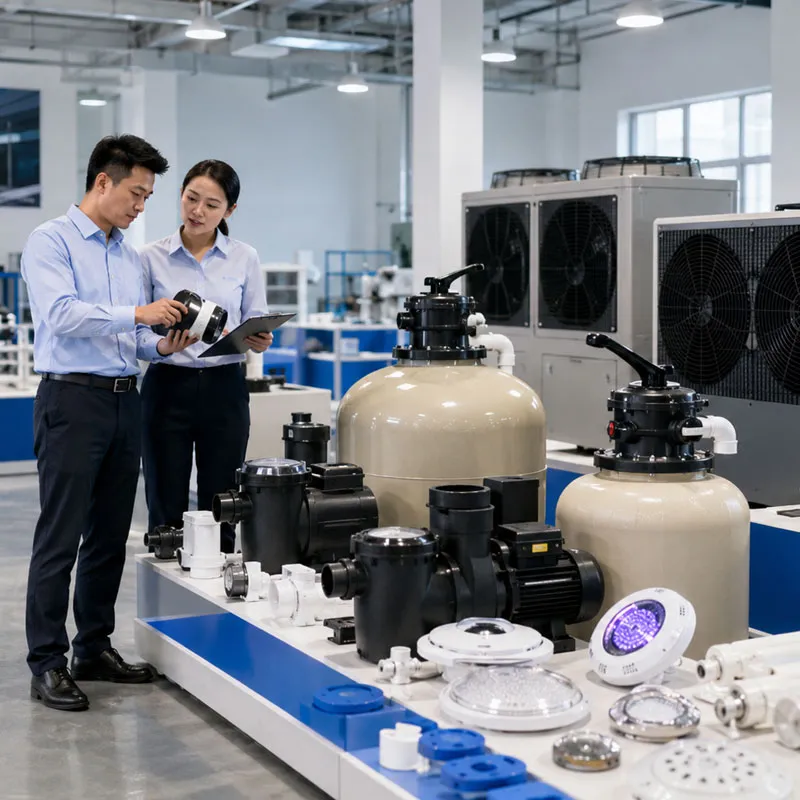
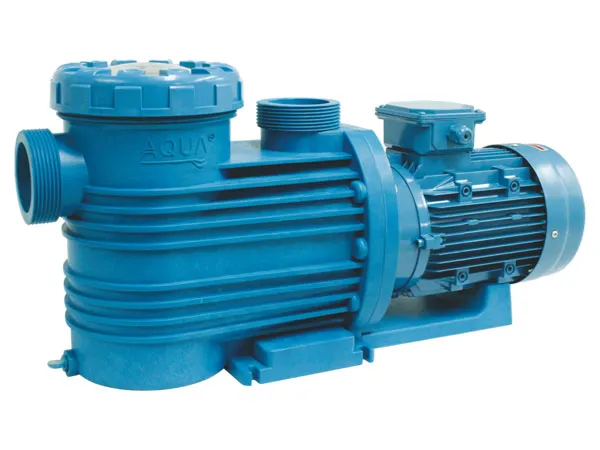
A commercial pool heat pump purchase should begin with a project heat-load definition, not a catalogue capacity headline. The unit must maintain the required water temperature under the site’s actual air temperature, humidity, wind, pool surface area, operating schedule and cover condition. It must also fit the electrical supply, hydraulic system, acoustic limits, corrosion environment and service plan.
This guide is written for hotel developers, pool contractors, distributors, consultants, sports facilities, schools, wellness centers and other B2B buyers. It explains what information belongs in a request for quotation, how to compare capacity and coefficient of performance under consistent rating conditions, how to estimate initial heating and ongoing heat loss, and how to evaluate a supplier beyond price.
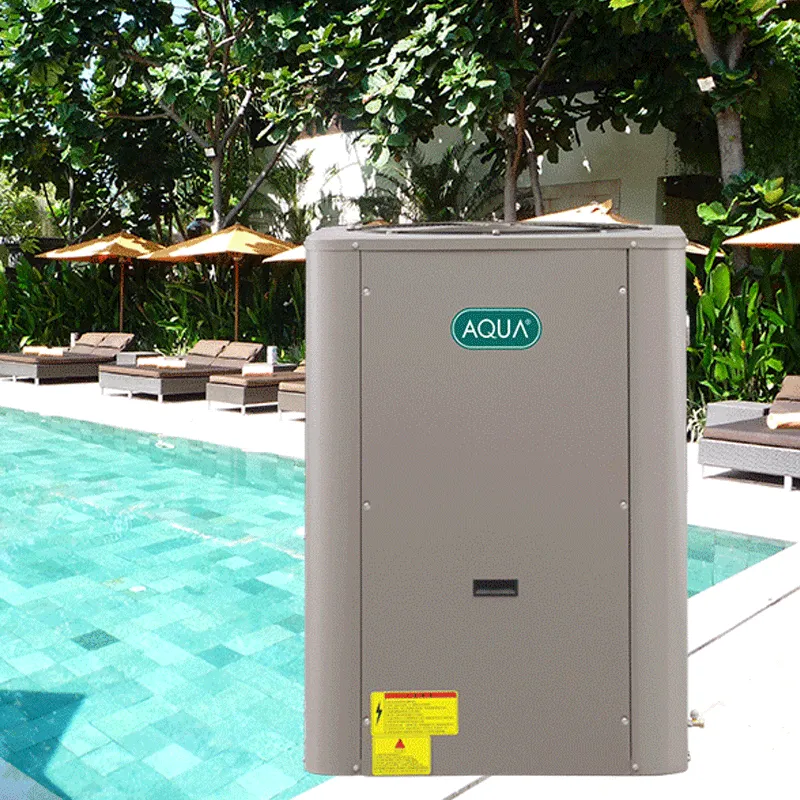
AQUA offers pool heat pumps, inverter heat pumps, chillers, hot-water units, high-temperature products and related pool equipment. The brand’s wider portfolio makes it possible to review heating together with pumps, filters, dehumidification, disinfection and controls. This matters because a heat pump that is correctly sized thermally can still underperform when water flow, bypass piping or control logic is wrong.
What Is a Commercial Pool Heat Pump?
A commercial pool heat pump is an electrically driven system that transfers heat between ambient air and pool water for sustained temperature control in higher-duty aquatic facilities.
Unlike a resistance heater, an air-source heat pump does not convert every unit of electricity directly into the same amount of heat. It uses a refrigeration cycle to absorb heat from outdoor or plant-room air and transfer it through a water heat exchanger. The ratio of delivered heating output to electrical input is expressed as coefficient of performance, or COP.
A COP of 5 means that, at the stated test condition, the unit delivers five units of heating output for each unit of electrical input. COP changes with ambient air temperature, humidity, entering water temperature, compressor speed, fan speed, frosting conditions and water flow. A single headline COP is therefore not enough to compare commercial equipment.
Commercial projects differ from small residential pools because they often have longer operating hours, stricter temperature targets, larger exposed surfaces, higher ventilation losses, more demanding noise requirements and greater consequences if heating is unavailable. Hotels and aquatic centers may also require multiple units for staging or redundancy.
Commercial Pool Heat Pump Sizing Inputs
Commercial pool heat pump sizing inputs are the environmental, thermal, hydraulic and operating data needed to calculate required heating or cooling capacity.
Pool length, width, average depth, surface area and water volume
Indoor or outdoor installation
Target water temperature and permitted recovery time
Minimum and design ambient air temperature
Relative humidity and wind exposure
Daily operating hours and seasonal operating months
Whether an insulated pool cover is used, and during which hours
Freshwater or saltwater condition and expected salinity
Makeup-water temperature and expected replacement volume
Indoor ventilation and dehumidification arrangement
Available electrical voltage, phase, frequency and power limit
Design circulation flow, pipe sizes and available plant-room space
Maximum acceptable sound level and nearest sensitive location
Required redundancy, control interface and local certification
These inputs should appear in the RFQ so every supplier calculates from the same basis. A quotation based only on pool volume forces the supplier to assume climate, exposure and operating conditions. Two suppliers can then propose very different capacities while both appear technically plausible.
Surface area often has more influence on ongoing heat loss than volume because evaporation occurs at the water surface. Volume is important for initial warm-up and thermal storage. A shallow leisure pool can have a large surface relative to its volume, while a deep diving pool can have a smaller surface relative to volume. Their heating behavior is different even if total water volume is similar.
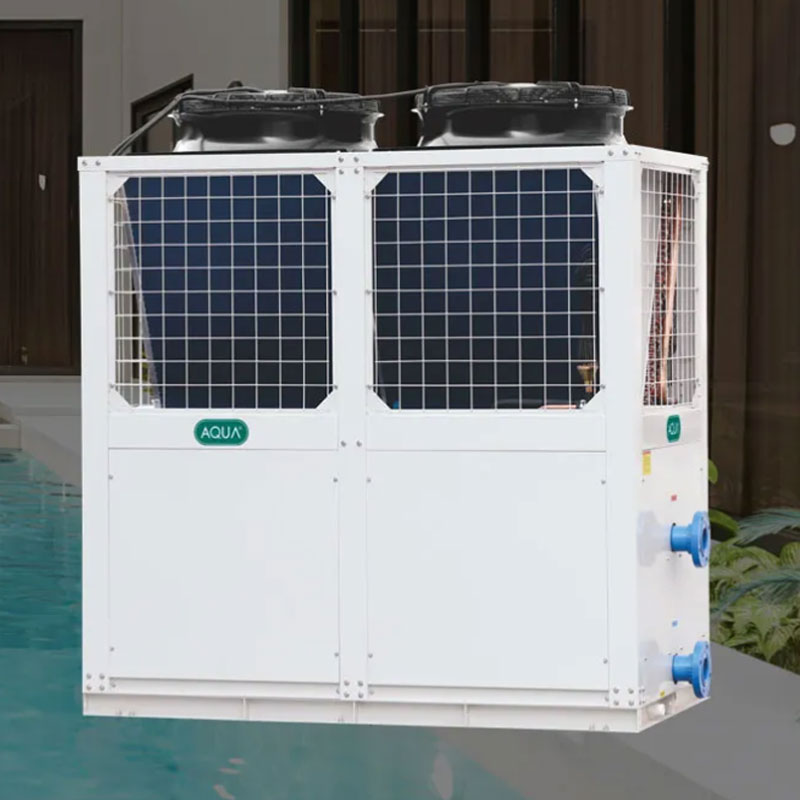
How to Estimate Initial Pool Heating Capacity
Initial pool heating capacity is the heat required to raise the full water mass from its starting temperature to the target temperature within a defined time.A common preliminary imperial calculation is:Required heat in BTU = Pool volume in gallons × 8.34 × Temperature rise in °FFor a 50,000-gallon pool that must rise by 10°F, the theoretical heat required is approximately 4,170,000 BTU. If the target recovery time is 24 hours, the theoretical average is about 173,750 BTU per hour before adding simultaneous heat losses and system inefficiency.
In metric units, water requires approximately 4.186 kilojoules per kilogram per degree Celsius. A 200-cubic-meter pool contains roughly 200,000 kilograms of water. Raising it by 5°C requires approximately 4,186,000 kilojoules, or about 1,163 kilowatt-hours of thermal energy, before accounting for heat loss. To complete that rise in 24 hours, the theoretical average thermal capacity is about 48.5 kilowatts plus the concurrent losses.
These calculations are useful for checking the order of magnitude, but they are not a complete equipment selection. An outdoor pool continues to lose heat through evaporation, convection and radiation during warm-up. An indoor pool can lose heat to evaporation and ventilation. The final capacity should cover both the desired recovery and the design heat loss.
Ongoing Pool Heat Loss and the Value of a Cover
Ongoing pool heat loss is the thermal energy continuously lost through evaporation, convection, radiation, conduction, ventilation and makeup water.Evaporation is often the dominant loss from an uncovered pool. Wind accelerates evaporation outdoors, while indoor ventilation removes humid air and can increase heating demand. Water features, waterfalls and spas add surface disturbance and can increase evaporation. A specification should state whether these features operate during the heating design condition.
The U.S. Department of Energy states that using a pool cover can reduce pool heating costs by approximately 50 to 70 percent. The actual benefit depends on cover effectiveness, usage hours, climate, pool temperature and user behavior. For a commercial project, the supplier should calculate both covered and uncovered scenarios when the cover schedule is uncertain.
A cover also reduces water loss and chemical consumption, but it creates operational considerations. Staff must deploy it consistently, storage space is needed, and the cover system must suit the venue. A hotel may avoid a visible cover during guest hours but use it overnight. An aquatic center may need a motorized reel to make daily operation practical.
When comparing equipment, do not solve an avoidable heat-loss problem only by buying a larger heat pump. Improving wind protection, cover use, pipe insulation and operating schedules can reduce both capital and running cost.
Pool Heat Pump Capacity at Different Climates
Pool heat pump climate performance is the heating capacity and efficiency available at the project’s actual outdoor air and water conditions.Heat pumps generally deliver less heating capacity as ambient air temperature falls. Frost can form on the evaporator in cool, humid conditions, causing periodic defrost cycles. During defrost, useful heating may temporarily decrease. A model that performs well in warm, humid air may not maintain the same output during a cold shoulder season.
Every quotation should state the rating point for capacity and COP. Typical published points may use air conditions such as 27°C dry bulb and a warm water temperature, but markets and standards use different combinations. Values measured at different air and water temperatures cannot be compared directly.
For year-round or cold-climate operation, ask for a capacity table or curve at several ambient temperatures, including the project design minimum. Confirm whether the stated capacity is gross or net of defrost, whether an auxiliary heater is required, and what minimum ambient temperature the controls permit.
For very hot climates, cooling may also be required. A reversible heat pump or dedicated chiller should be selected from the peak cooling load, not assumed from its heating rating. Solar gain, warm makeup water and high ambient temperature can push a pool above the desired range, especially for competition or therapy applications.
COP, SCOP and Honest Efficiency Comparison
COP and seasonal efficiency metrics compare useful heat output with electrical input under defined operating conditions.
| Metric | What It Represents | How to Use It | Common Comparison Error |
|---|
| COP | Heating output divided by electrical input at one stated condition | Compare units at exactly the same air, humidity, water and speed condition | Comparing headline values tested at different temperatures |
| Partial-load COP | Efficiency when an inverter unit operates below full output | Useful for long periods of temperature maintenance | Assuming the highest partial-load COP represents all operating hours |
| SCOP or seasonal metric | Weighted performance across multiple conditions | Better for climate-specific annual assessment when methodology is disclosed | Using a seasonal value based on a climate unlike the project location |
| Input power | Electrical demand at the stated operating point | Use for cable, breaker, transformer and operating-cost estimates | Ignoring fan, controls or auxiliary heater consumption |
| Heating capacity | Useful thermal output at the rating point | Compare with the calculated design load | Using nominal model name as guaranteed output |
A fair comparison normalizes all units to the same design condition. Ask each supplier to complete a schedule showing air dry-bulb temperature, relative humidity or wet bulb, entering and leaving water temperature, water flow, heating capacity, electrical input and COP.
Also request sound and capacity data at full and partial load. An inverter unit may operate quietly and efficiently while maintaining temperature, but it must still provide adequate capacity during recovery. A procurement decision should consider the expected hours at each operating condition rather than selecting the single highest COP value.
Inverter Pool Heat Pump vs Fixed-Speed Heat Pump
An inverter pool heat pump modulates compressor and often fan speed, while a fixed-speed unit cycles its compressor on and off at one principal output level.
| Evaluation Area | Inverter Heat Pump | Fixed-Speed Heat Pump |
|---|
| Capacity control | Modulates across a stated range | Primarily on or off |
| Temperature maintenance | Can match lower steady loads more closely | Uses cycling and wider control deadband |
| Part-load efficiency | Often stronger when operating in an efficient modulation range | Limited part-load modulation |
| Noise behavior | Can be quieter at reduced speed | Runs at full compressor speed when active |
| Controls | More sophisticated electronics and communication options | Simpler control architecture |
| Service consideration | Requires access to compatible boards, sensors and trained support | May be simpler for some local technicians |
| Initial cost | Usually higher | Usually lower |
An inverter is not automatically the best choice for every project. A seasonal facility that heats quickly and shuts down may value capital cost differently from a hotel that maintains temperature every day. A site with unstable power or limited electronic service capability should review protection and spare-parts planning carefully.When sourcing from an inverter heat pump supplier, request the modulation range, minimum stable capacity, compressor brand and model, fan control, electronic expansion valve information, communication protocol, low-temperature logic, defrost strategy, fault codes and availability of replacement control boards.
Hydraulic Design for a Commercial Pool Heat Pump
Commercial pool heat pump hydraulic design ensures the required water flow passes through the heat exchanger without excessive pressure loss or corrosion risk.The supplier should specify minimum, nominal and maximum water flow. Flow below the minimum can cause poor heat transfer, high refrigerant pressure or protective shutdown. Excessive flow can create high pressure drop, erosion, noise or damage. The circulation pump and bypass valves must maintain the acceptable range during all operating modes.
A bypass is commonly used so part of the circulation flow can avoid the heat exchanger when total system flow exceeds the unit requirement. The valve positions should be commissioned using measured flow or pressure data, not guesswork. Automatic valves may be useful when multiple heat pumps are staged.
For parallel units, balanced headers and isolation valves are important. Reverse-return piping or designed balancing can help distribute flow. Each unit should be serviceable without shutting down the complete plant where redundancy is required.
Water chemistry and salinity affect heat-exchanger material selection. Titanium heat exchangers are commonly used for pool and saltwater compatibility, but the supplier should still state permitted chemistry limits. Correct bonding, grounding and chemical dosing location reduce corrosion risk. Concentrated chemicals should not flow backward into a heat exchanger when circulation stops.
Commercial Pool Heat Pump Noise and Placement
Pool heat pump placement determines airflow, recirculation risk, service access, condensate management and sound impact.An air-source heat pump requires unobstructed intake and discharge air. Installing it in a confined room without engineered ventilation can cause the unit to recirculate its own cold discharge air, reducing capacity and efficiency. Multiple units need spacing that prevents one unit’s discharge from entering another’s intake.
Sound data should identify the test method, distance and operating condition. A value measured at partial load cannot be compared directly with a value measured at full load. Hotels, villas, rooftops and property-boundary installations should be checked against local acoustic limits and nighttime requirements.
Vibration isolators, a stable base, flexible connectors and thoughtful orientation can reduce disturbance. Barriers may help control sound, but they must not restrict airflow. Condensate and defrost water need a safe drain path that will not create ice, staining or slip hazards.Maintenance clearance should be shown on drawings. Technicians need access to electrical panels, refrigerant components, filters, fans and heat exchangers. A visually hidden installation that cannot be serviced is not a successful commercial design.
Lifecycle Cost Comparison for Pool Heat Pumps
Pool heat pump lifecycle cost is the combined capital, energy, maintenance, downtime and replacement expense over the planned ownership period.
| Cost Category | Data Required | Evaluation Method |
|---|
| Equipment | Unit price, accessories, controls and freight | Compare complete installed scope |
| Electrical infrastructure | Input power, starting current, cable and breaker requirements | Include any transformer or service upgrade |
| Energy | Hourly load profile, COP by condition and electricity tariff | Model annual consumption rather than using one COP |
| Installation | Foundation, crane, piping, bypass, drainage and control integration | Use project-specific contractor estimates |
| Maintenance | Cleaning, inspection, parts and technician rates | Estimate annual planned service |
| Downtime | Redundancy, repair lead time and business impact | Assign a risk cost for critical facilities |
| Replacement | Expected service life and major component availability | Use discounted lifecycle analysis where appropriate |
A simple annual electricity estimate multiplies input power by operating hours, but a better model divides the year into climate and load bands. Inverter units may spend many hours at partial load. Recovery after closure or cover removal may require full output. Defrost and auxiliary heat can change winter performance.
Use the same electricity tariff and heating requirement for all bids. Include pool-cover assumptions, because a cover can have a larger impact on annual cost than a small difference in headline COP. State whether taxes, demand charges and maintenance are included.
Commercial Pool Heat Pump Supplier Evaluation Scorecard
A pool heat pump supplier evaluation scorecard converts technical, manufacturing and service evidence into a transparent purchasing decision.
| Evaluation Category | Suggested Weight | Evidence to Review |
|---|
| Thermal and hydraulic compliance | 25% | Capacity tables, COP data, water-flow range and pressure drop |
| Product quality and certification | 15% | Applicable certificates, component traceability and factory tests |
| Climate suitability | 15% | Low-temperature capacity, defrost logic and operating limits |
| Controls and integration | 10% | BMS protocol, remote control, staging and alarm functions |
| Manufacturing capability | 10% | Production facilities, QA process, test equipment and capacity |
| Service and spare parts | 15% | Local or regional support, parts list, lead time and training |
| Commercial terms | 10% | Price, payment, warranty, delivery and documentation |
The weights should reflect project risk. A seasonal villa development may emphasize cost and standardization. A five-star hotel or public aquatic center may place more weight on redundancy, noise, remote monitoring and response time.For high-value orders, request factory test records, serial-number traceability, wiring diagrams, refrigerant data, pressure-test procedures and a spare-parts recommendation. A supplier should be able to explain the rating basis and identify assumptions used in sizing.
How to Compare Pool Heat Pump Manufacturers
Comparing pool heat pump manufacturers means verifying whether their products, data, quality systems and service resources can support the complete project lifecycle.
Begin with technical evidence. Ask each bidder to show heating capacity and COP at the same conditions, then check hydraulic range, sound test basis, operating temperature range and control functions. Review the exact model on each certificate rather than accepting a general company document.
Next, inspect manufacturing and quality capability. AQUA states that it was founded in 1999, operates production and research bases totaling approximately 40,000 square meters, maintains four production bases, and has accumulated 56 or more patents and 256 product certifications. Such figures should be supported by current company and model documentation during procurement.
A capable pool heat pump manufacturer should also explain component selection, incoming inspection, refrigerant leak testing, electrical safety testing, water-side pressure testing and end-of-line operation testing. For OEM or distributor programs, confirm labeling, packaging, manual language, private-brand options, minimum order quantity and change-control procedures.
Finally, evaluate after-sales support. Identify who diagnoses faults, how remote data is shared, which components are stocked, what the warranty excludes, and how quickly a replacement board, fan motor, sensor or compressor can be supplied.
Commercial Pool Heat Pump RFQ Template
A commercial pool heat pump RFQ template is a standardized data schedule that allows suppliers to quote and guarantee against the same project conditions.
Project description: Venue, country, pool function, indoor or outdoor use and operating season.
Pool data: Dimensions, surface area, volume, target temperature and water chemistry.
Climate data: Design minimum and maximum air temperature, humidity, wind and altitude.
Operating schedule: Daily hours, cover schedule, water-feature schedule and recovery requirement.
Thermal requirement: Calculated design load, required capacity at design condition and cooling need if applicable.
Hydraulic data: Available flow, pipe size, permitted pressure drop and bypass arrangement.
Electrical data: Voltage, phase, frequency, maximum input and local protection rules.
Controls: BMS protocol, remote monitoring, staging, temperature sensors and alarm outputs.
Acoustics and placement: Sound limit, measurement point, clearance and airflow constraints.
Documentation: Certificates, drawings, curves, manuals, wiring, commissioning and test records.
Commercial scope: Quantity, delivery, warranty, spare parts, training and after-sales response.
Ask the bidder to identify every deviation from the RFQ. A clean compliance schedule reduces disputes and prevents important assumptions from remaining hidden in email exchanges.
Common Commercial Pool Heat Pump Procurement Mistakes
Commercial pool heat pump procurement mistakes arise when capacity, efficiency or price is compared without normalizing project conditions and lifecycle obligations.
Sizing from pool volume only: Surface area, climate, wind, cover use and recovery time can change the load substantially.
Comparing COP at different rating points: Warmer air and lower water temperature can produce a more favorable result.
Ignoring low-temperature capacity: Nominal warm-weather output may not meet the design winter load.
Assuming a cover will always be used: The operational schedule should be documented and an uncovered case checked.
Leaving hydraulic design to site improvisation: Incorrect flow and bypass settings can cause alarms and poor heat transfer.
Using sound values without test context: Distance, load and measurement method matter.
Buying one large unit without redundancy review: A single failure can stop heating for the whole facility.
Omitting spare control boards and sensors: Low-cost parts can create long downtime when not locally available.
Choosing the lowest purchase price: Electricity, maintenance, infrastructure and downtime may dominate ownership cost.
How AQUA Supports Commercial Heating and Cooling Projects
AQUA supports commercial pool heating and cooling projects with multiple heat-pump and chiller categories plus complementary circulation, filtration, disinfection and dehumidification equipment.The range includes inverter pool heat pumps, standard pool heat pumps, hot-water heat pumps, high-temperature units, chillers and specialized products for hot springs, floor heating and mariculture. This broader scope can be useful for distributors and contractors serving different water temperatures and climate conditions.When requesting a swimming pool heat pump for sale, provide a completed project data sheet rather than only the pool dimensions. AQUA can then prepare a preliminary model selection, identify whether staged units or redundancy are advisable, and coordinate the required water flow and controls with the rest of the equipment package.
Frequently Asked Questions
The following FAQs address common commercial pool heat pump sizing and procurement questions.
1. How do I size a commercial pool heat pump?
Calculate the initial warm-up requirement and the ongoing design heat loss using pool surface, volume, climate, wind, humidity, water temperature, cover schedule and operating hours. Select capacity at the project design condition, not only at a warm standard rating point.
2. What COP should a pool heat pump have?
COP must be evaluated at a stated condition. A higher number is meaningful only when air temperature, humidity, water temperature, water flow and compressor speed are comparable. Seasonal performance is more useful for annual cost analysis.
3. Does an inverter pool heat pump always save more energy?
Inverter control can improve part-load operation and temperature maintenance, but savings depend on climate, load profile, control settings, equipment sizing and operating hours. Compare an annual load model rather than one maximum COP.
4. How much can a pool cover reduce heating cost?
The U.S. Department of Energy states that pool covers can reduce heating costs by approximately 50 to 70 percent. Actual savings depend on cover quality, schedule, climate, wind and pool use.
5. Should a commercial project use one large heat pump or several units?
Multiple units can provide staging, part-load efficiency and redundancy, but they add valves, controls and maintenance points. The decision should reflect design load, minimum load, downtime risk, plant-room layout and budget.
6. What documents should a pool heat pump supplier provide?
Request capacity and COP tables, hydraulic data, sound data, electrical information, dimensional drawings, certificates, wiring diagrams, control protocol, commissioning instructions, warranty terms and spare-parts lists.
Conclusion
A commercial pool heat pump should be purchased as a defined thermal and hydraulic system. Establish the target water temperature, design climate, cover schedule, recovery time and heat loss. Compare capacity and COP at identical conditions, then verify water flow, pressure drop, electrical demand, sound, placement, corrosion compatibility and control integration.Strong procurement also evaluates manufacturing evidence, documentation, spare parts and after-sales response. The lowest quotation is not necessarily the lowest lifecycle cost, and the highest headline COP is not necessarily the best seasonal result. By using a normalized RFQ and supplier scorecard, project teams can select an AQUA heating or cooling solution that is measurable, maintainable and aligned with the facility’s actual operating conditions.
External References
 English