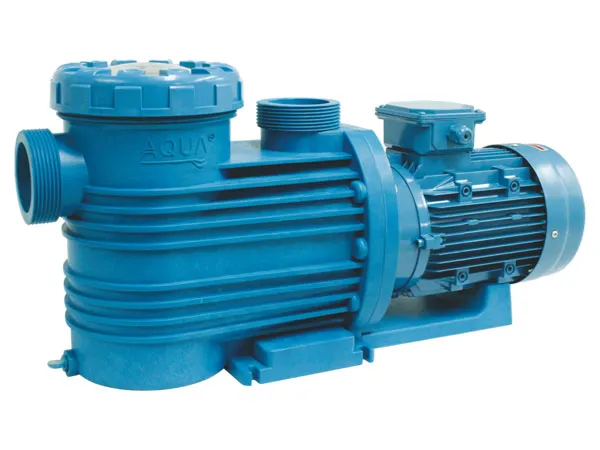
A swimming pool pump should be selected from the hydraulic requirement of the complete circulation system, not from pool size alone and not from motor horsepower alone. The correct pump must deliver the required filtration flow at the calculated total dynamic head while remaining within the safe operating limits of the filter, heater, disinfection equipment, pipes, drains and returns.
This guide is designed for pool contractors, distributors, consultants, hotel engineers, aquatic facility managers and B2B buyers. It explains the calculations behind pump selection, shows how to interpret a performance curve, compares pump types, and provides a procurement checklist that can be used when requesting quotations. The objective is to prevent three common outcomes: a pump that cannot meet turnover, a pump that wastes energy because it is oversized, or a pump that creates excessive velocity, noise and maintenance problems.
AQUA manufactures filtration pumps, variable-speed pumps and supporting pool equipment for residential and commercial projects. Because pump performance depends on the entire system, the most useful supplier discussion starts with drawings, flow requirements and equipment pressure losses rather than a request for “the same horsepower as the old pump.”
What Does Swimming Pool Pump Sizing Mean?
Swimming pool pump sizing is the process of matching required water flow and system resistance to a pump performance curve at an acceptable efficiency and operating speed.
Four values control the initial selection: pool and balance-tank volume, required turnover time, design flow, and total dynamic head. The flow establishes how much water must circulate per unit of time. The head represents the resistance that the pump must overcome. A pump model is suitable only when its curve passes through the required operating point with adequate efficiency and without violating component limits.
Motor power is a result of the required hydraulic duty, pump efficiency and service conditions. It should not be the first sizing variable. Two pumps with the same motor rating can deliver very different flows because their impellers, casing geometry, speed and efficiency are different. Similarly, replacing an old pump with a larger motor can increase flow beyond the filter rating and create higher pipe velocity without improving water quality.
A preliminary sizing calculation is useful for budgeting, but final selection should use the manufacturer’s tested curve and the project’s actual pipe layout. Long pipe runs, elevation changes, fittings, control valves, heat exchangers, ultraviolet units and dirty filters can materially change the operating point.
How to Calculate Required Swimming Pool Pump Flow
Required swimming pool pump flow is the water volume that must circulate through the treatment system within the permitted turnover period.
The basic equation is:
Design filtration flow = Total recirculating water volume ÷ Turnover time
For a 240 cubic meter pool with a six-hour turnover requirement, the base filtration flow is 40 cubic meters per hour. If the authority requires a four-hour turnover, the base flow becomes 60 cubic meters per hour. The designer must then check whether the pool outlets, filter, heater, treatment equipment and pipe sizes can support that flow.
Total recirculating volume may include the pool, balance tank and other water volumes that are part of the filtration circuit. A separate water-feature pump should not automatically be added to filtered flow when its water bypasses the treatment system. Feature flow, however, may affect surge storage, makeup water, noise, power demand and return hydraulics.
Turnover requirements vary by venue and jurisdiction. The 2024 Model Aquatic Health Code provides reference maximum turnover periods of two hours for activity pools, eight hours for diving pools, one hour for wading pools and six hours for many other pools. Local codes and the authority having jurisdiction take precedence. Spas, therapy pools and special attractions may require different values.
After calculating the regulatory flow, consider operating conditions. A hotel pool with continuous sunscreen loading, a school pool used in concentrated sessions and a lightly used private pool may have the same volume but different practical filtration and cleaning demands. The selected design should satisfy code while also supporting realistic water clarity and maintenance intervals.
How to Calculate Total Dynamic Head for a Pool Pump
Total dynamic head is the combined resistance caused by elevation, pipe friction, fittings and equipment at the intended circulation flow.
Total dynamic head is normally expressed in meters or feet of water. It includes static head where relevant and dynamic losses that increase as flow rises. In a closed circulation loop, simple elevation differences may partially cancel, but open tanks, elevated discharges, suction lift and pressure requirements still matter. The project engineer should define the calculation method for the actual arrangement.
Dynamic losses occur in straight pipe, elbows, tees, valves, strainers, filters, heaters, chlorinators, ultraviolet reactors, flow meters, check valves, inlets and other components. Manufacturers often publish pressure-drop data at different flows. These losses should be added at the design flow rather than estimated from connection diameter alone.
A worked preliminary example can illustrate the process:
| System Element | Estimated Head Loss at Design Flow | Selection Note |
|---|
| Suction pipe and fittings | 4 m | Use actual length, pipe diameter and fitting equivalents |
| Hair and lint strainer | 1 m | Check clean and loaded conditions |
| Pool filter | 5 m clean, 8 m before cleaning | Select for the planned dirty-filter condition |
| Heat exchanger or heat pump bypass circuit | 3 m | Use manufacturer pressure-drop data |
| UV or disinfection equipment | 2 m | Confirm minimum and maximum operating flow |
| Return pipe, valves and inlets | 5 m | Include balancing valves and terminal losses |
| Design allowance | 2 m | Use a justified allowance, not arbitrary oversizing |
| Estimated total | 25 m at the dirty-filter condition | Use 25 m as the preliminary duty point |
If the required flow is 60 cubic meters per hour, the preliminary duty point is 60 cubic meters per hour at 25 meters of head. The final pump must be checked against its curve at the intended speed. The clean-filter operating point should also be reviewed because lower resistance can increase flow beyond the rating of the filter or treatment equipment.
How to Read a Swimming Pool Pump Curve
A swimming pool pump curve shows the flow a pump can deliver at different heads for a defined impeller, speed and test condition.
The horizontal axis normally represents flow, while the vertical axis represents head. The system curve rises as flow increases because friction losses generally grow approximately with the square of flow. The actual operating point is where the pump curve and system curve intersect.
A buyer should request more than a single maximum-flow number. Maximum flow is usually measured at very low head and may not represent the real installation. Similarly, maximum head occurs near zero flow and is not a useful normal operating point. The important value is performance at the project duty point.
Where available, review efficiency, input power, current, sound and net positive suction head data across the curve. A suitable pump should operate in a stable, efficient portion of its curve. Operation too far to one side can increase noise, vibration, recirculation, motor loading or seal stress.
For a variable-speed pump, request performance at several speeds or a complete speed map. Reducing speed shifts the curve downward and leftward. This allows the same pump to support filtration, backwash, heating, cleaning and water-feature modes at different flow rates, provided the controls and component limits are properly configured.
Swimming Pool Pump Types Compared
Swimming pool pump types are categories of pumps designed for different flow-control, filtration, aeration and auxiliary functions.
| Pump Type | Control Method | Main Strength | Main Limitation | Typical Use |
|---|
| Single-speed filtration pump | Fixed motor speed | Simple controls and familiar maintenance | Limited ability to match changing flow demand | Basic residential and small commercial filtration |
| Two-speed pump | High and low preset speeds | Some operating flexibility | Less precise than variable-speed control | Filtration plus higher-flow cleaning mode |
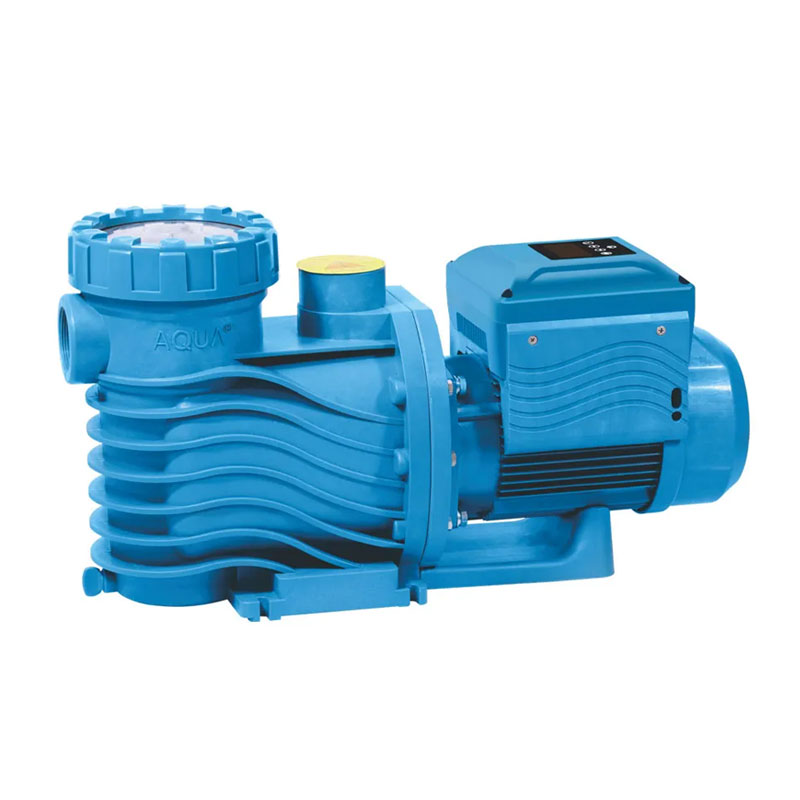
| Variable-speed pump | Electronic speed control | Flow can be adjusted for different operating modes | Higher initial cost and more control configuration | Energy-conscious residential and commercial systems |
| Commercial centrifugal pump | Fixed speed, VFD or external control | High flow, serviceable construction and project flexibility | Requires engineered selection and installation | Hotels, schools, sports venues and aquatic centers |
| Air blower or air pump | Fixed or controlled airflow | Provides spa aeration rather than water filtration | Not a substitute for a circulation pump | Spas, air massage and bubble systems |
| Booster or feature pump | Application dependent | Supports cleaners, jets or water features | May bypass filtration and add hydraulic complexity | Pressure cleaners, slides, fountains and counter-current systems |
Buyers searching for a swimming pool pump for sale should first decide which function the pump must perform. A filtration pump needs compatibility with continuous circulation and a strainer arrangement. A feature pump may prioritize a different head and flow range. An air pump moves air, not pool water. Combining these functions without checking duty points often produces poor performance.
Variable-Speed Pool Pump Energy and Operating Logic
A variable-speed pool pump changes motor speed so circulation flow can be matched to the operating mode instead of remaining at one fixed maximum setting.
The affinity laws explain why speed control can reduce energy use. For a geometrically similar centrifugal pump operating within an appropriate range, flow changes approximately in proportion to speed, head changes approximately with the square of speed, and power changes approximately with the cube of speed. ENERGY STAR illustrates that moving water at half the flow rate can require about one-eighth of the power under comparable conditions.
ENERGY STAR also states that certified variable-speed pool pumps use about 60 percent less energy than single-speed counterparts. Actual savings at a specific project depend on run time, hydraulic resistance, required turnover, control settings, electricity tariff, pump efficiency and whether lower speed can be maintained for most operating hours. The percentage should therefore be used as a reference, not a guaranteed project outcome.
A practical control schedule may include low-speed filtration, moderate-speed heating, higher-speed backwash, and temporary high-speed cleaning or water-feature modes. Each mode should have a verified flow target. Running at the lowest possible speed is not automatically correct if the heater, chlorinator, UV system or flow switch requires a minimum flow.
When evaluating a variable speed pool pump for sale, request the speed range, flow or pressure control functions, motor efficiency, permanent magnet motor information, communication protocol, fault history, dry-run protection, overload protection, schedule capacity, external input options and replacement control availability.
How Pipe Size and Velocity Affect Pump Selection
Pipe size affects pool pump selection by changing friction loss, velocity, noise, suction conditions and the system operating point.
A small pipe may connect physically to a high-flow pump, but it can create high velocity and rapidly rising head loss. This increases power demand and may cause noise, vibration or poor suction performance. A larger pipe reduces friction but adds material and installation cost. Pipe diameter should therefore be selected from the required flow, permitted velocity, route and lifecycle economics.
The 2024 MAHC provides reference maximum velocities of six feet per second in suction piping and eight feet per second in discharge piping for the recirculation system. Local codes may be more restrictive. Many designers choose lower practical velocities to reduce noise and head loss, especially near guestrooms, residential areas and sensitive equipment.
Suction design requires particular care. Long suction runs, many elbows, clogged strainers, low water level, excessive lift or high water temperature can reduce available suction pressure and increase the risk of cavitation. The pump should be installed as close to the water source as practical, with an airtight suction line, adequate pipe diameter and correct priming conditions.
Changing a pump without checking the existing pipe can be risky. A more powerful replacement may shift the operating point to a much higher flow, increasing velocity and exceeding filter limits. Renovation projects should record existing pipe sizes, route, valve condition and pressure readings before selecting equipment.
How Filters, Heaters and Disinfection Equipment Limit Pump Flow
Pool equipment limits pump flow because every component has a minimum flow, maximum flow, pressure rating and pressure drop that must be respected.
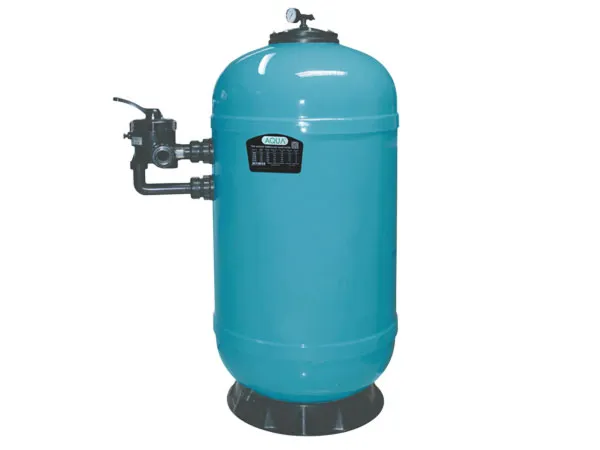
The filter has a maximum certified filtration rate and a separate backwash requirement. A heater or heat pump may need a minimum flow to transfer heat safely and a maximum flow to avoid excessive pressure drop or erosion. Salt chlorinators, dosing cells and ultraviolet systems commonly specify an operating range. Flow switches may shut equipment down outside that range.
These limits should be placed on one system schedule. The selected normal filtration flow must fall within the overlapping acceptable range of all active components. If no common range exists, the design may need bypasses, separate circuits, larger equipment or variable-speed control.
Dirty-filter pressure loss is especially important. A pump selected only for the clean-filter condition may fall below required flow before the filter reaches its planned cleaning point. Conversely, an oversized fixed-speed pump may exceed the filter rating immediately after backwash. A variable-speed pump can help maintain target flow, but only when a reliable flow meter or validated control method is used.
Residential and Commercial Pool Pump Selection Differences
Residential and commercial pool pump selection differs mainly in duty cycle, code requirements, redundancy, maintainability and consequence of failure.
A private residential pool may operate on a flexible schedule and tolerate temporary shutdown for maintenance. A hotel, school, club or aquatic center may operate for long hours and serve many users. Commercial systems often require certified equipment, documented flow, spare capacity, duty-and-standby arrangements, accessible strainers, isolation valves and formal commissioning.
Commercial selection should consider whether one pump failure will close the facility. Parallel pumps can provide redundancy, but they require correct check valves, isolation, balanced piping and control logic. Two pumps operating together do not always deliver exactly twice the flow because the combined pump curve interacts with the system curve.
Serviceability also matters. A close-coupled pump may be compact, while a split-coupled pump may provide easier motor or seal maintenance in a large plant room. Buyers should define allowable downtime, local technician capability, lifting access, spare seal requirements and whether a complete replacement pump should be kept on site.
Swimming Pool Pump Procurement Comparison
A swimming pool pump procurement comparison evaluates hydraulic performance, efficiency, materials, controls, certification and lifecycle support under the same project conditions.
| Comparison Item | Minimum Supplier Evidence | Why It Matters |
|---|
| Duty point | Flow and head marked on tested pump curve | Confirms the pump can meet the actual system requirement |
| Efficiency and input power | Performance data at the duty point and intended speed | Supports energy and electrical sizing comparisons |
| Materials | Casing, impeller, shaft, seal and fastener specifications | Determines corrosion and chemical compatibility |
| Motor and electrical data | Voltage, phase, frequency, insulation, protection and current | Prevents site power mismatch |
| Control capability | Schedules, external inputs, communication and protections | Determines integration with the pool control system |
| Certification | Applicable certificates and model references | Supports regulatory and project approval |
| Noise | Test condition and measured sound data where available | Important for hotels, villas and indoor plant rooms |
| Spare parts | Recommended spares, lead times and exploded drawing | Reduces future downtime |
| Warranty and support | Written scope, exclusions and response process | Clarifies lifecycle responsibility |
Quotation comparisons should use the same flow, head, water temperature, elevation, voltage and installation condition. A lower-priced pump quoted at a different duty point is not a valid equivalent. Where suppliers offer alternative models, ask them to state the reason for the substitution and mark the operating point on each curve.
Swimming Pool Pump Installation and Commissioning Checklist
A pool pump commissioning checklist verifies that the installed system reaches the intended flow safely, efficiently and repeatably.
Confirm pump model, impeller, voltage, frequency and direction of rotation.
Verify suction and discharge pipe diameters against approved drawings.
Check that valves are open, strainers are clean and the pump is fully primed.
Inspect flexible connectors, supports and alignment where applicable.
Record flow, suction pressure, discharge pressure and calculated head.
Measure electrical current and compare it with motor data.
Check leaks, abnormal noise, vibration and seal condition.
Test low-flow, loss-of-prime, overload and other protective functions.
Verify each programmed speed and operating mode.
Confirm filter, heater, UV and chlorination flow limits.
Record clean-filter baseline pressure for future maintenance.
Train operators on strainer cleaning, priming, alarms and shutdown.
The MAHC reference calls for a flow meter capable of measuring within plus or minus five percent of actual design flow for each filtration system. A calibrated or verified flow reading is more useful than relying only on pump speed or gauge pressure. The commissioning report should become part of the operating manual.
Common Pool Pump Sizing Mistakes
Pool pump sizing mistakes occur when a model is chosen without reconciling flow, head, component limits and actual operating modes.
Selecting by horsepower: Horsepower does not define delivered flow at project head.
Using maximum flow from a catalogue: Maximum flow usually occurs at a head unlike the real system.
Ignoring the dirty-filter condition: Flow can fall below the turnover requirement before cleaning.
Oversizing for safety: Excess flow can raise velocity, noise, energy use and equipment stress.
Assuming variable speed solves every mismatch: Controls cannot correct undersized pipe, poor suction or incompatible equipment ranges.
Leaving out water features: Shared circuits can create different operating points when features turn on or off.
Failing to verify electrical supply: Voltage, phase and frequency must match the site.
Skipping commissioning: A correct design can still underperform because of valve positions, air leaks or control settings.
How AQUA Supports Pool Pump Projects
AQUA supports pool pump projects by combining pump manufacturing with filtration, heating, disinfection, lighting, fittings and system-level equipment selection.
AQUA states that it was founded in 1999 and operates production and research facilities totaling approximately 40,000 square meters. Its pump portfolio includes filtration pumps, variable-speed pumps and air pumps for residential and commercial applications. The wider product range allows project teams to discuss pump duty together with filter capacity, heating pressure drop and treatment equipment limits.
When approaching a swimming pool equipment manufacturer, send the pool volume, turnover requirement, pipe route, equipment schedule, elevation, water temperature, electrical supply, preferred controls and required certifications. AQUA can then recommend a preliminary model and identify information still needed for final hydraulic verification.
Frequently Asked Questions
The following FAQs address common pump-sizing and procurement questions from pool project buyers.
1. What size swimming pool pump do I need?
Calculate the required filtration flow from pool volume and turnover time, calculate total dynamic head at that flow, and select a pump whose tested curve meets the resulting duty point. Do not select from horsepower alone.
2. Can I install a larger pump to improve filtration?
A larger pump may exceed the filter and pipe flow limits without improving filtration quality. Filter performance depends on the correct filtration rate, circulation layout and maintenance, not simply more flow.
3. Is a variable-speed pool pump worth considering?
It can be valuable when the system has multiple operating modes or long filtration hours. Savings depend on how much operation can occur at reduced speed and whether all equipment remains within its required flow range.
4. How do I estimate total dynamic head?
Add the calculated losses from suction pipe, return pipe, fittings, valves, filter, heater, disinfection equipment and other components at the design flow. Include relevant static head and use manufacturer pressure-drop data.
5. Why does actual pump flow differ from the catalogue?
The installed flow is determined by the intersection of the pump curve and the real system curve. Pipe size, length, fittings, filter condition, elevation and valve position can all shift that operating point.
6. What should be included in a swimming pool pump quotation?
The quotation should identify the model, duty point, pump curve, efficiency, input power, materials, seal, motor data, controls, certifications, dimensions, warranty, spare parts and lead time.
Conclusion
Reliable swimming pool pump selection begins with a measurable duty point. Calculate turnover flow, estimate total dynamic head, review clean and dirty system conditions, and place the required operating point on the manufacturer’s curve. Then verify pipe velocity, suction conditions, filter rating, heater and disinfection flow ranges, electrical supply, controls and service access.
Single-speed, two-speed, variable-speed and commercial pumps can all be appropriate when matched to the application. The strongest procurement decision is not the model with the largest motor or highest maximum-flow claim. It is the pump that delivers the required water movement efficiently, remains within every component limit, and can be commissioned and maintained by the site team. AQUA’s integrated equipment range can support this system-level selection for residential and commercial projects.
External References
 English