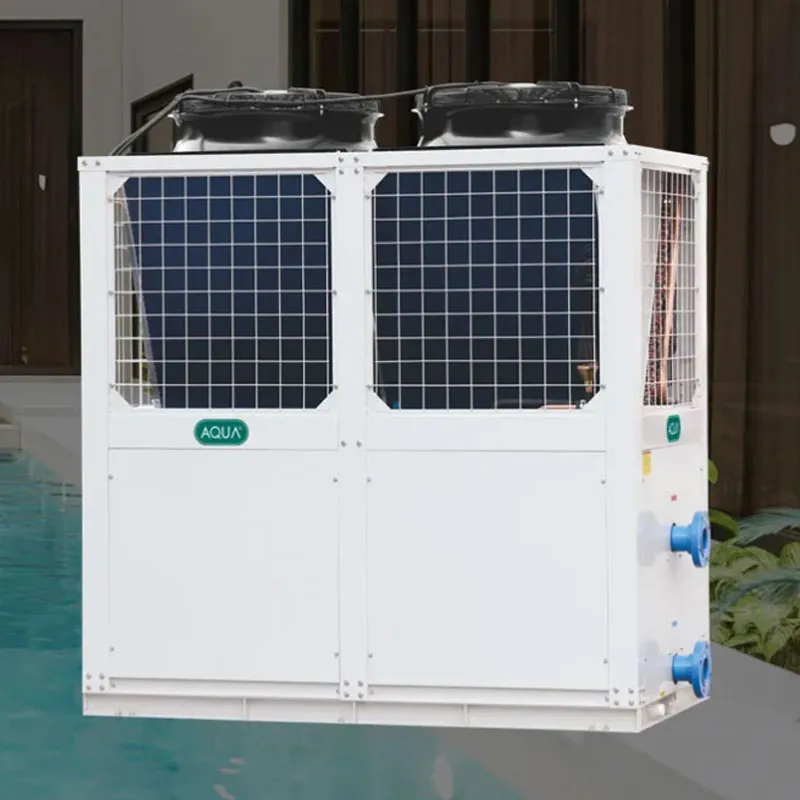
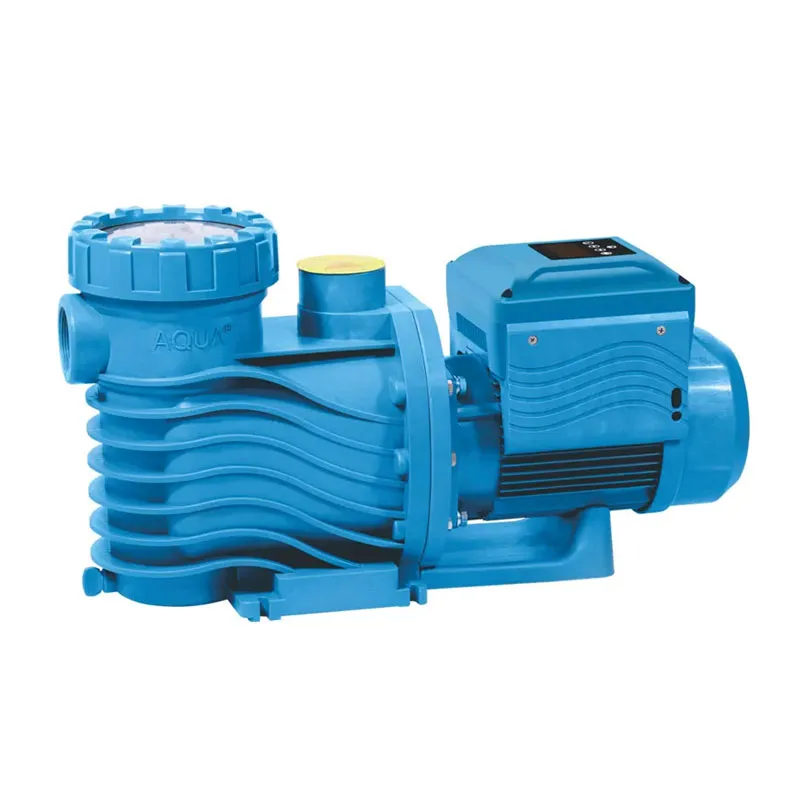
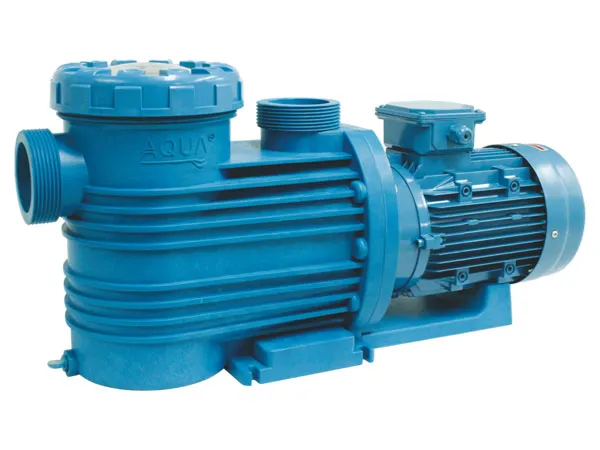
A pool filtration system is not simply a tank connected to a pump. It is a coordinated water-treatment process that must move the required volume of water, capture suspended material, support disinfection, remain serviceable, and operate within the hydraulic limits of the pool. A filter that looks large enough in a catalogue may still be unsuitable when the design flow, bather load, pipe losses, backwash arrangement, local code, water supply, or plant-room space is ignored.
This guide explains the main filtration technologies used in residential pools, hotels, schools, clubs, sports venues, spas and other aquatic projects. It is written for distributors, contractors, consultants and facility buyers who need to compare equipment on more than purchase price. The goal is to help you define a realistic specification, shortlist the correct filter family, and request comparable quotations from suppliers.
AQUA supplies sand, cartridge, diatomaceous earth, perlite, commercial and integrated filtration solutions as part of a wider pool equipment portfolio. When a project requires a coordinated package, the filter should be selected together with the pump, disinfection equipment, heating or cooling equipment, valves, fittings and controls rather than as an isolated component.
What Are Pool Filtration System Types?
Pool filtration system types are the different equipment and media configurations used to remove suspended contaminants from recirculating pool water.The most common categories are sand filters, cartridge filters, diatomaceous earth filters, perlite or other precoat filters, high-capacity commercial filters, and compact integrated filtration systems. They all perform the same broad function, but they differ significantly in filtration fineness, allowable loading, cleaning method, water consumption, plant-room footprint, capital cost and operator skill requirements.
For preliminary comparison, many pool professionals use typical nominal capture ranges of roughly 20–40 microns for conventional sand filtration, 10–20 microns for cartridge filtration and 2–5 microns for diatomaceous earth filtration. These are not universal guarantees. Actual performance depends on media grade, filter velocity, coagulation practice, loading, maintenance condition and the tested data for the specific model. A procurement specification should therefore request certified or laboratory-supported performance rather than relying only on a generic technology label.
The filter also cannot compensate for poor circulation. If returns, drains and skimmers do not create effective mixing, contaminated water may remain in parts of the pool even when the mechanical room equipment is correctly sized. Filtration, circulation and disinfection should be treated as one system.
Pool Filtration System Types Compared
A pool filtration comparison evaluates each technology against water clarity, hydraulic capacity, maintenance, water consumption, space and lifecycle cost.
| Filter Type | Typical Preliminary Particle Range | Cleaning Method | Water Use During Cleaning | Plant-Room Space | Best-Fit Applications | Main Procurement Risk |
|---|
| Sand filter | About 20–40 microns, model dependent | Backwashing and rinsing | Moderate to high | Moderate | Residential pools, hotels, schools, clubs and many public pools | Undersized filter area or excessive filtration velocity |
| Cartridge filter | About 10–20 microns, model dependent | Remove and wash or replace cartridges | Low | Low to moderate | Projects with limited wastewater capacity, compact equipment rooms and smaller pools | Insufficient cartridge area or difficult service access |
| Diatomaceous earth filter | About 2–5 microns, model dependent | Backwash or disassemble, then recharge media | Moderate | Moderate | Projects prioritizing very fine water clarity | Media handling, disposal rules and operator training |
| Perlite or precoat filter | Fine filtration, dependent on media and equipment design | Discharge spent precoat and recharge | Low to moderate depending on design | Moderate | Commercial pools seeking fine filtration and reduced footprint | Availability of media and correct precoat operation |
| Commercial horizontal or depth filter | Depends on media and design rate | Backwash, air scour or configured cleaning cycle | Project dependent | High | Large hotels, aquatic centers, sports venues, water parks and high-bather-load pools | Poor access, incomplete backwash design or unmatched pump duty |
| Integrated filtration system | Depends on internal filter configuration | Model dependent | Low to moderate | Very low | Renovations, villas, rooftop pools and sites without a conventional plant room | Limited expansion flexibility and proprietary service parts |
The comparison table is a starting point rather than a final selection. For example, a cartridge filter may save backwash water but require more manual cleaning. A sand filter may be easier for local operators but need a suitable drain and enough incoming water for backwash. A fine precoat system may produce excellent clarity but impose stricter operating procedures. The best choice is the one that can be operated correctly throughout the project life.
How Sand Pool Filtration Systems Work
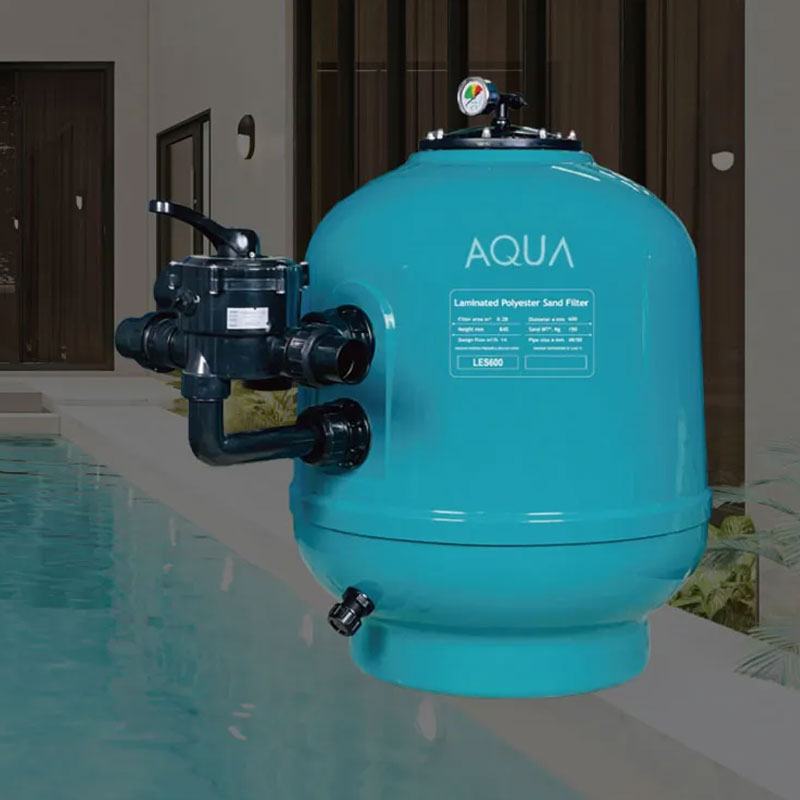
A sand pool filtration system passes recirculating water through a bed of graded granular media that captures suspended material within and between the media grains.Sand filters remain common because they are robust, familiar to operators and available in a wide range of sizes. Residential units are often supplied with top-mount or side-mount multiport valves. Larger commercial systems may use deeper media beds, horizontal vessels, multiple tanks, automated valves or dedicated air-and-water backwash arrangements.
The most important sizing variable is effective filter area, not only vessel diameter. The design flow divided by the effective area gives the filtration rate. If the rate is too high, pressure loss rises, dirt penetrates deeper into the bed, filter cycles shorten and water clarity may deteriorate. The 2024 Model Aquatic Health Code provides a useful reference framework for public aquatic facilities, although local regulations always control. It also requires equipment to be selected and operated within certified ratings.
Backwash design deserves the same attention as normal filtration. The system needs sufficient reverse flow to expand and clean the media without carrying excessive sand to waste. The drain must accept the instantaneous backwash flow. The water supply or balance tank must also recover the discharged volume without interrupting facility operation. For regions facing water restrictions, the annual cost and availability of backwash water can influence the technology decision.
Buyers comparing swimming pool sand filters for sale should request the vessel material, design pressure, test pressure, filter area, media specification, recommended filtration flow, backwash flow, valve size, connection standard, maximum operating temperature and pressure-drop curve. Asking only for tank diameter and price makes quotations difficult to compare.
How Cartridge Pool Filtration Types Work
Cartridge pool filtration uses pleated replaceable elements to create a large filtration surface inside a compact vessel.Cartridge filters do not normally require a high-flow backwash cycle. The elements are removed and cleaned with water, or replaced when damaged or no longer recoverable. This makes them attractive where water discharge is restricted, where a sewer connection is unavailable, or where the mechanical room cannot accommodate a large backwash system.
The key specification is total cartridge area. A compact vessel may contain a surprisingly large pleated area, but the practical loading rate should still reflect pool use and cleaning frequency. A residential pool with low bather load can tolerate a different service interval from a hotel pool exposed to sunscreen, cosmetics and continuous use. A filter that is technically large enough at clean condition may create unacceptable labor if cartridges require frequent removal.
Service clearance must be included in the plant-room layout. The lid has to open, the cartridge must lift out, and an operator needs a safe washing area. If the vessel is installed directly below pipes, cable trays or a low ceiling, routine maintenance becomes difficult. Procurement drawings should show the minimum vertical and side clearance, not only the equipment footprint.
Cartridge quality also affects lifecycle cost. Buyers should compare pleat material, core strength, end-cap construction, chemical compatibility, maximum differential pressure, cleaning procedure and replacement availability. It is usually better to specify an acceptable annual replacement budget than to judge the system only by the initial vessel price.
How Diatomaceous Earth and Precoat Filters Work
Diatomaceous earth and other precoat filters form a thin porous layer on a support element to capture very fine suspended particles.In a precoat process, the filter medium is mixed into water and deposited evenly on grids, leaves, tubes or another support surface. During operation, contaminants accumulate on this layer. At the end of the cycle, the spent cake is removed and a fresh layer is applied.
The main advantage is fine clarity at a relatively low filtration rate. The main challenge is operational discipline. The operator must add the correct media quantity, achieve an even precoat, avoid running the system without media, monitor differential pressure, and dispose of spent material in accordance with local rules. Procurement should include dosing or slurry equipment, media storage, personal protection procedures, waste handling and operator training.
Perlite can be used in some precoat systems as an alternative media. The suitability depends on the filter design, certification, local availability and required water quality. Buyers should not assume that all precoat materials are interchangeable. The equipment manufacturer should confirm approved media, dosage, start-up sequence and expected cycle length.
Fine filtration does not eliminate the need for disinfection. A filter removes particles; it does not provide a complete microbiological barrier by itself. Public pools, spas and high-risk venues may require supplemental or secondary treatment depending on local code and facility type.
Commercial Pool Filtration System Types
Commercial pool filtration systems are engineered for higher flow, heavier contaminant loading, longer operating hours and more demanding maintenance conditions than typical residential equipment.Commercial projects should begin with the venue type and required turnover time. The 2024 MAHC lists maximum turnover references such as two hours for activity pools, eight hours for diving pools, one hour for wading pools and six hours for other pools. Spa and therapy applications can require much shorter turnover periods. These figures are useful for design discussion, but the authority having jurisdiction may specify different values.
Turnover flow is calculated by dividing the total recirculating water volume by the permitted turnover time. The total volume may include the pool and balance or surge tank. Feature water that bypasses filtration should not be counted as filtered recirculation. After calculating the base flow, the designer must check whether skimmers, gutters, drains, filters, heaters, disinfection equipment and piping can all operate at that flow.
Commercial filters should be selected for the dirty-filter condition, not only the clean-filter condition. As contaminants accumulate, differential pressure rises. The pump must still meet the required flow at the system head expected before cleaning. At the same time, the selected pump should not exceed the filter’s certified maximum flow when the filter is clean.
Redundancy may also be necessary. Two or more filters arranged in parallel can allow partial operation during maintenance and reduce the consequence of one vessel being unavailable. However, parallel systems need balanced piping and valves so each vessel receives an appropriate share of the flow. Unequal loading can cause one filter to foul early while another is underused.
When evaluating pool filter manufacturers, request hydraulic calculations, general arrangement drawings, valve logic, backwash sequence, media quantities, test certificates, spare-parts lists and commissioning procedures. A commercial filtration quotation should describe how the system will operate, not simply list tanks and pumps.
Integrated Filtration Systems for Space-Limited Pools
An integrated filtration system combines several circulation and treatment components in a compact assembly intended to reduce plant-room requirements and installation work.
Wall-hanging, underground and compact modular systems can be useful for villas, renovations, rooftop pools and sites where conventional pipe routes are difficult. Depending on the model, the assembly may incorporate a pump, filter, skimmer, return, disinfection device, light or controls.
The main benefit is simplified installation. The main limitation is reduced flexibility. A conventional plant room allows individual components to be changed, expanded or rearranged. An integrated system may have fixed flow capacity, proprietary dimensions and limited access. Before selection, confirm whether the unit supports the pool volume, turnover target, bather load, heating connection, water-feature demand and future expansion.
Noise and vibration should be checked carefully when the equipment is close to guestrooms, residences or pool decks. Access panels must remain reachable after architectural finishes are completed. Underground units need drainage, ventilation and protection against flooding. A compact layout is only successful when it remains safe and maintainable.
How to Calculate Required Filtration Flow
Required filtration flow is the water volume that must pass through the filtration process within the permitted turnover period.The basic calculation is:Required flow = Total system volume ÷ Turnover timeFor a 300 cubic meter hotel pool with a six-hour turnover target, the base recirculation flow is 50 cubic meters per hour. If the local code requires four hours, the flow becomes 75 cubic meters per hour. The designer then verifies that the filter area, pump curve, pipes, fittings, heater, disinfection equipment and outlets can support the selected flow.
Do not add unrelated feature-pump flow to the filtration calculation. A water slide or fountain may use a separate pump that returns water without passing through the filter. That flow can affect hydraulics and balance-tank design, but it does not automatically improve turnover.
Flow measurement is necessary after installation. The MAHC reference calls for a flow meter accurate within plus or minus five percent of actual design flow for each filtration system. A commissioning report should record measured flow, clean-filter pressure, pump settings and valve positions. Without baseline readings, operators cannot distinguish normal loading from a developing blockage or hydraulic fault.
How to Select Among Different Types of Pool Filtration Systems
Selecting among different types of pool filtration systems requires matching water-quality goals with hydraulic demand, operating resources and site constraints.
Define the pool use. Record whether the pool is residential, hotel, school, competition, therapy, spa, water park or another venue. Bather load and operating hours directly affect contaminant loading.
Confirm the governing code. Identify required turnover, equipment certification, secondary treatment, drain design and water-quality limits before equipment selection.
Calculate total volume and flow. Include the pool and relevant balance tanks. Use the required turnover and check peak operating conditions.
Set a filtration objective. Define whether the priority is robust operation, low water use, very fine clarity, compact installation or automated maintenance.
Check utilities. Review electrical supply, incoming water, wastewater capacity, drainage, ventilation and available plant-room area.
Assess operator capability. A technically advanced filter may underperform if the site cannot maintain media, cartridges, controls or waste procedures.
Compare lifecycle cost. Include energy, water, replacement media, cartridges, labor, chemicals, spare parts and downtime.
Verify integration. Confirm the pump duty, valve sizes, piping velocity, heater pressure drop, disinfection flow limits and control logic.
A useful decision rule is to choose the simplest technology that can reliably meet the project requirement. Additional filtration fineness has value only when the facility can maintain the system and when it supports a defined water-quality or operating objective.
Filtration System Procurement Specification Checklist
A filtration procurement specification is a structured list of hydraulic, mechanical, quality and service requirements used to obtain comparable supplier quotations.
Pool type, dimensions, volume, operating hours and estimated bather load
Required turnover time and design recirculation flow
Filter technology, effective area and maximum certified flow
Vessel material, lining, design pressure, test pressure and temperature limit
Connection size, flange or thread standard and pipe material
Filter media type, grade, quantity and approved alternatives
Clean and dirty pressure loss at design flow
Backwash flow, duration, water volume and drain requirement
Valve arrangement, actuator type and automation sequence
Pressure gauges, differential pressure indication and flow meter
Required certifications and test documents
Installation clearances and equipment-room layout
Commissioning, training, manuals and recommended spare parts
Warranty terms, response time and replacement-component availability
For a coordinated project, an experienced swimming pool equipment supplier should be able to review how the filter interacts with pumps, heaters, UV or ozone systems, dosing equipment and controls. This system-level review reduces the risk of buying individually acceptable components that do not work well together.
Common Filtration Selection Mistakes
Filtration selection mistakes occur when equipment is chosen from a single headline parameter while hydraulic, operational or maintenance conditions are ignored.
Choosing by vessel diameter alone: Effective filter area, media depth and certified flow are more meaningful.
Using pump horsepower as the sizing basis: The filter must be matched to actual flow and system head, not motor label size.
Ignoring backwash discharge: A system can filter correctly but fail because the drain cannot accept the cleaning flow.
Overlooking service access: Cartridge removal, lid opening, valve operation and media replacement need physical clearance.
Assuming finer is always better: Fine filtration can add media cost, labor and operational complexity.
Failing to plan spare parts: Seals, gauges, valves, cartridges and internal elements should be available for the expected service life.
Not documenting commissioning values: Operators need baseline flow and pressure readings to manage filter cycles.
How AQUA Supports Filtration Projects
AQUA supports filtration projects by combining multiple filter technologies with pumps, heating and cooling, disinfection, fittings, accessories and technical selection assistance.
AQUA states that the brand was founded in 1999 and operates production and research bases totaling about 40,000 square meters. Its filtration range includes fiberglass sand filters, cartridge filters, diatomaceous earth filters, perlite filters, commercial horizontal and depth filters, and compact integrated systems. This breadth is useful when a distributor or contractor must serve residential and commercial project types without forcing one filter technology into every application.
For a productive quotation, provide the pool dimensions, volume, indoor or outdoor location, intended use, operating hours, local turnover requirement, water temperature, available plant-room space, pipe standard, electrical supply and preferred level of automation. AQUA can then recommend a filter configuration and identify the pump, valve and treatment interfaces that must be checked.
Frequently Asked Questions About Pool Filtration System
The following FAQs answer common technical and procurement questions about pool filtration systems.
1. Which pool filtration system type is best?
There is no universal best type. Sand filters are robust and familiar, cartridge filters reduce backwash water, and DE or precoat filters offer finer filtration. The correct choice depends on flow, bather load, water restrictions, operator skill, space and local code.
2. How do I determine the required filter flow?
Divide the total recirculating water volume by the required turnover time, then verify the result against local regulations and component flow limits. The pump must deliver that flow at the calculated total dynamic head.
3. Is a larger pool filter always better?
A moderately oversized filter can reduce loading and extend cleaning intervals, but excessive size adds cost and space. Selection should be based on certified flow, effective area, maintenance objectives and system hydraulics.
4. Do cartridge filters require backwashing?
Most cartridge filters are cleaned by removing and washing the elements rather than reversing a high flow to waste. Confirm the specific model’s procedure and provide enough space for safe cartridge removal.
5. Can a fine filter replace UV, ozone or chemical disinfection?
No. Filtration removes suspended material, while disinfection controls microorganisms. Public and high-risk pools may also require supplemental or secondary treatment under local regulations.
6. What information should I send to a pool filter supplier?
Send the pool type, dimensions, volume, turnover target, design flow, bather load, plant-room drawing, pipe size, electrical supply, water temperature, local certification requirements and preferred cleaning method.
Conclusion
A successful filtration system begins with the venue, turnover requirement and operating reality—not with a catalogue model. Sand, cartridge, DE, perlite, commercial and integrated filters each solve a different combination of water-quality, space, maintenance and cost priorities. The selection should be supported by hydraulic calculations, certified equipment data, a workable cleaning process and clear commissioning records.For residential and commercial projects, compare quotations on effective area, rated flow, pressure loss, vessel construction, cleaning demand, controls, certification, spare parts and service support. When the filter is selected as part of a coordinated AQUA circulation and treatment package, the project team can reduce interface risk and create a system that remains clear, efficient and maintainable after installation.
External References
 English